As I entered community college, I realized that if I wanted to remain competitive, I'd have to learn competitively. I couldn't simply just sit there and do nothing, I had to act fast. At the time, I was recently getting into my major, Business Administration @ Northern Virginia Community College. In high school, I didn't know what to study, so I followed my dad's footsteps. Well, not fully. He studied marketing, while I was thinking about going to finance. I don't really know why I chose finance, but I know that I work with numbers far better than other things.
What is SQL?
Structured Query Language is the backbone of the internet. While you sit and see all the flashy websites, watch YouTube videos, play video games, they all require one thing: data. How does your computer or console remember how far you progressed, or how much money is sitting in your bank account with those virtual dollars? Databases is your answer. But what exactly is a database? In very simple words, as you probably already know, it's just a file(s) of your or others' information. But how do machines retrieve that data? From websites with a few dozen users to websites with millions or even billions of users, most use a version of SQL to retrieve vast amounts of data.
Why did I choose SQL? Many people working in finance rely heavily on data for their day-to-day responsibilities—after all, stock markets, retirement accounts, and overall financial systems run on databases. While exploring the Bureau of Labor Statistics (BLS) website, which my professor recommended, I researched the financial analyst career path. I learned that analysts evaluate past, present, and future financial trends. Finding this work genuinely fascinating, I looked deeper into the profession and discovered a "faster-than-average" job outlook along with a strong earning potential. I also researched their daily tasks and essential skills, realizing that beyond standard qualifications, education, and licenses, mastering technical tools early could give me a competitive edge. That is exactly why I decided to start learning SQL.
Database Certifications & Coursework
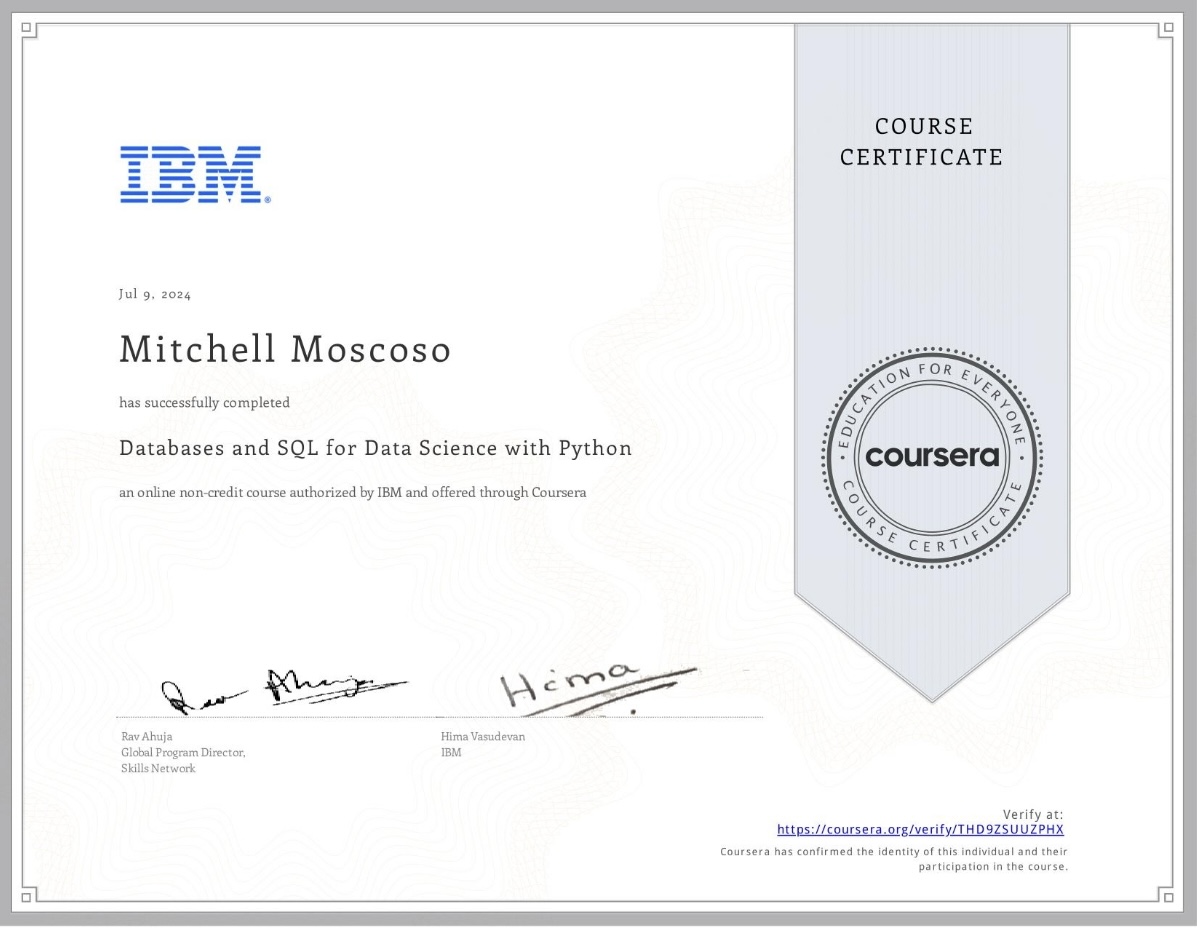
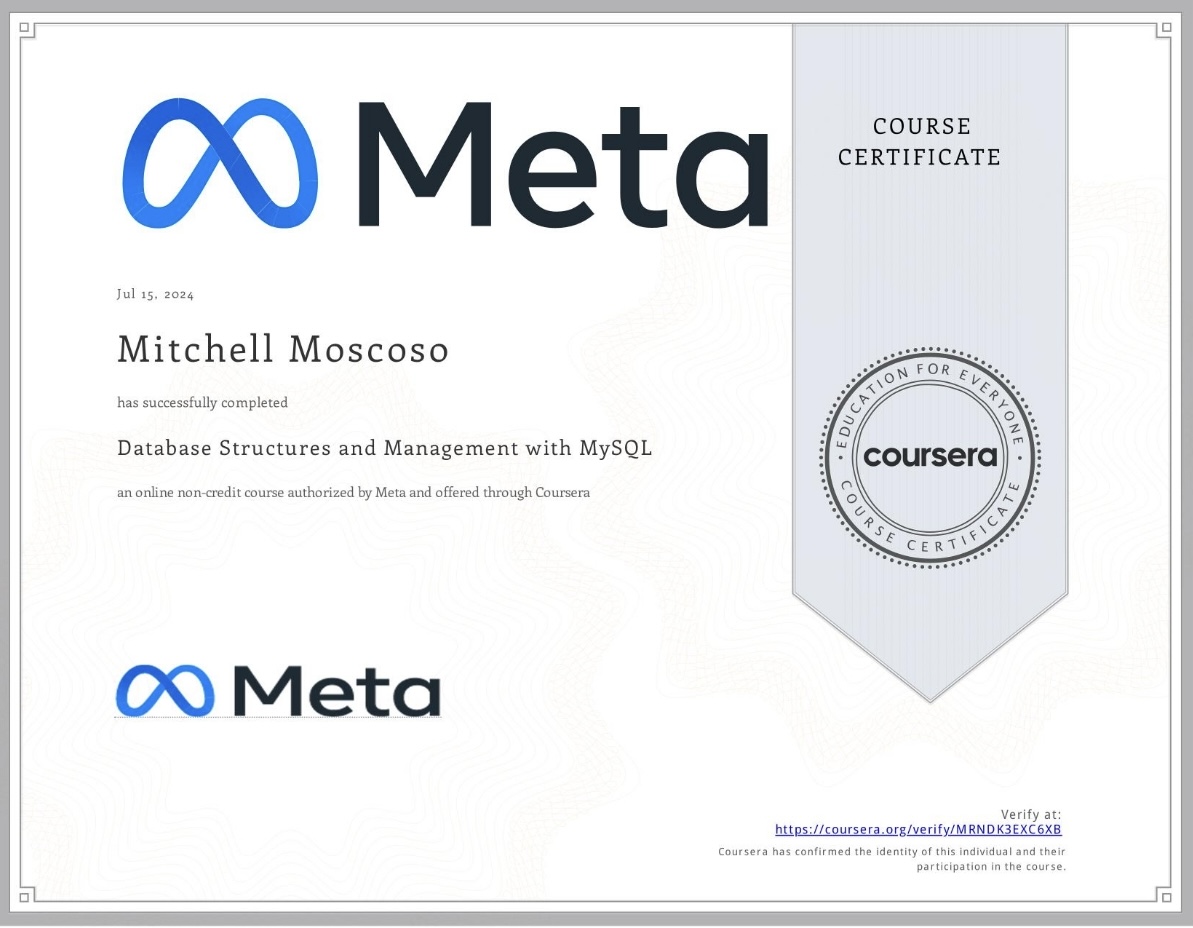
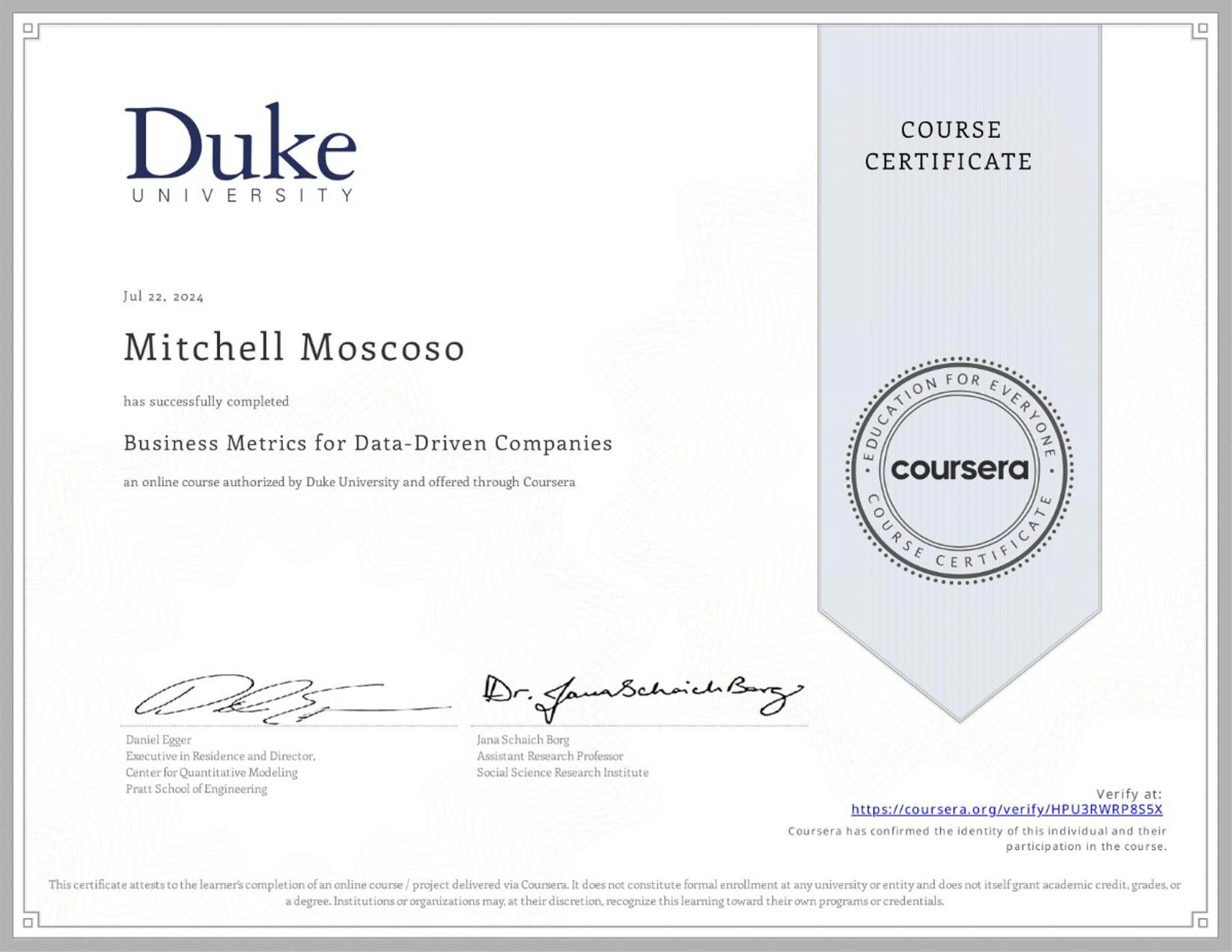
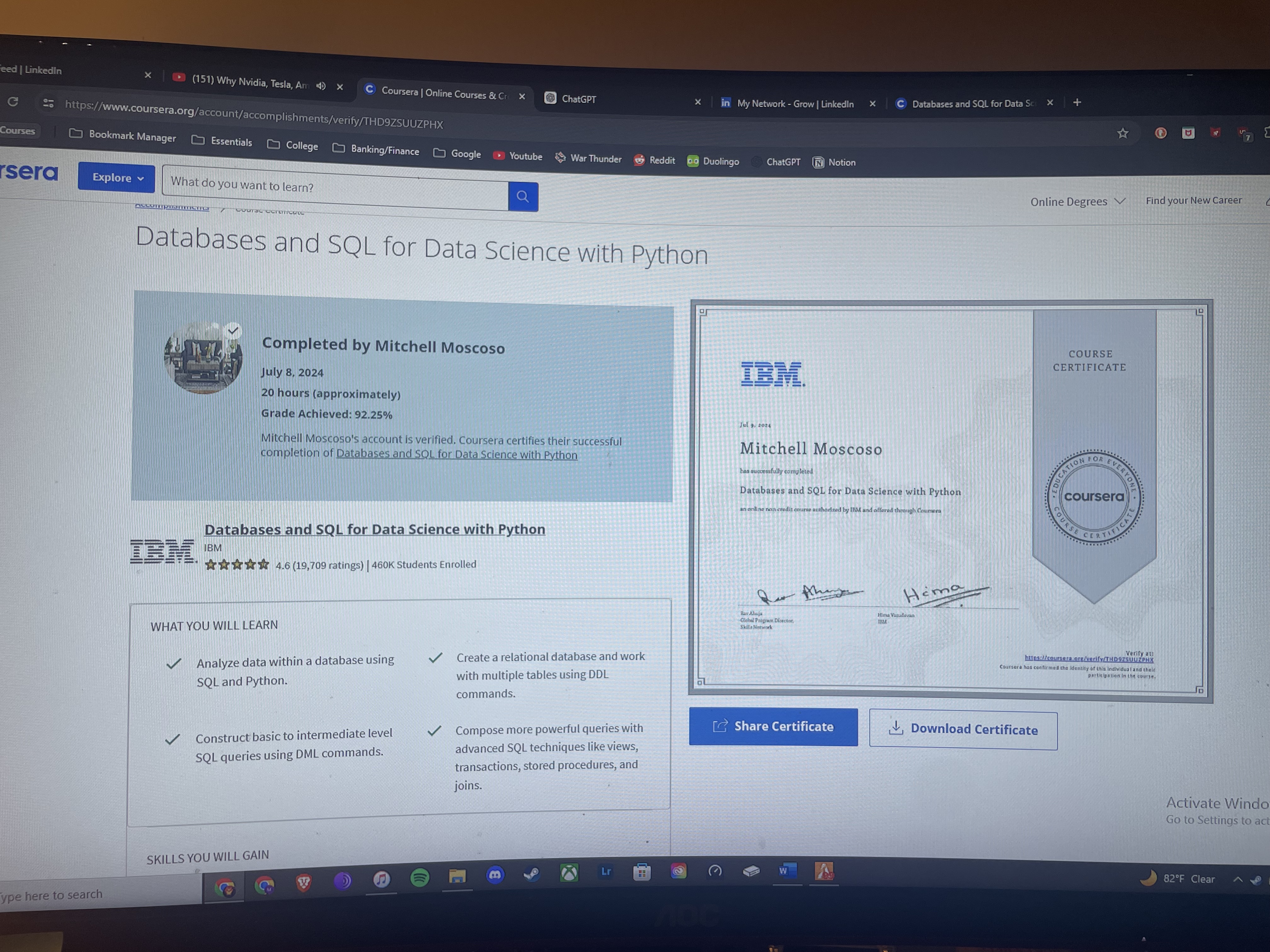
A few weeks into community college, I mapped out a clear timeline of actionable goals. I wanted to sharpen my skills in Microsoft Office and Google Workspace, learn SQL and Python, keep up with my language practice, and stay consistent with the piano. By the end of my first year, after trimming away what did not serve me and doubling down on what did, it was time to start coding. Taking action and staying on track was incredibly fulfilling. I took advantage of a one month free promotion on Coursera, diving into interactive database courses from IBM, Meta, and Duke University. Applying what I learned right away, I built a local project on my computer to create, edit, and retrieve data using SQL, which gave me a genuine sense of achievement.
Balancing 9 summer credits, a 25 hour work week, and finishing those courses before my free month ended pushed my time management skills to a new level. It was the busiest season of my life, but I found that I actually thrived on the hustle. There was something deeply satisfying about being needed, staying productive, and constantly moving forward. As I locked into that routine, the weeks flew by faster than I ever expected. From the middle to end of summer, I finished a 4.0gpa for the summer term, 3 finished courses and certificates, and hefty paychecks through the summer.
Looking back on everything I accomplished, I felt an incredible sense of pride. In a single summer, I had basically created my own internship. I ended up learning far more than I initially planned, discovering that SQL has multiple variations such as SQLite and PostgreSQL. I also realized how powerful it is to pair Python with SQL to automate queries for websites, applications, and backend systems. Wanting to leverage this progress, I updated my LinkedIn profile to make it look complete and polished, while also adding these new technical skills to my resume just in time for the career fair at the start of my second year.
Starting my final year at community college felt surreal. Having just begun the year before, I was suddenly facing the reality that I would soon be transferring to a new, unknown university, all while college applications were just opening up. As I settled into a fresh class schedule, new extracurriculars, and my part-time job, time seemed to move faster than ever. Just three weeks into the semester, the career fair arrived. When I shared my updated resume with friends and recruiters, they were genuinely impressed by the quality of my experience and projects. Realizing that my hard work was getting noticed was an incredible feeling.